The Floor Room
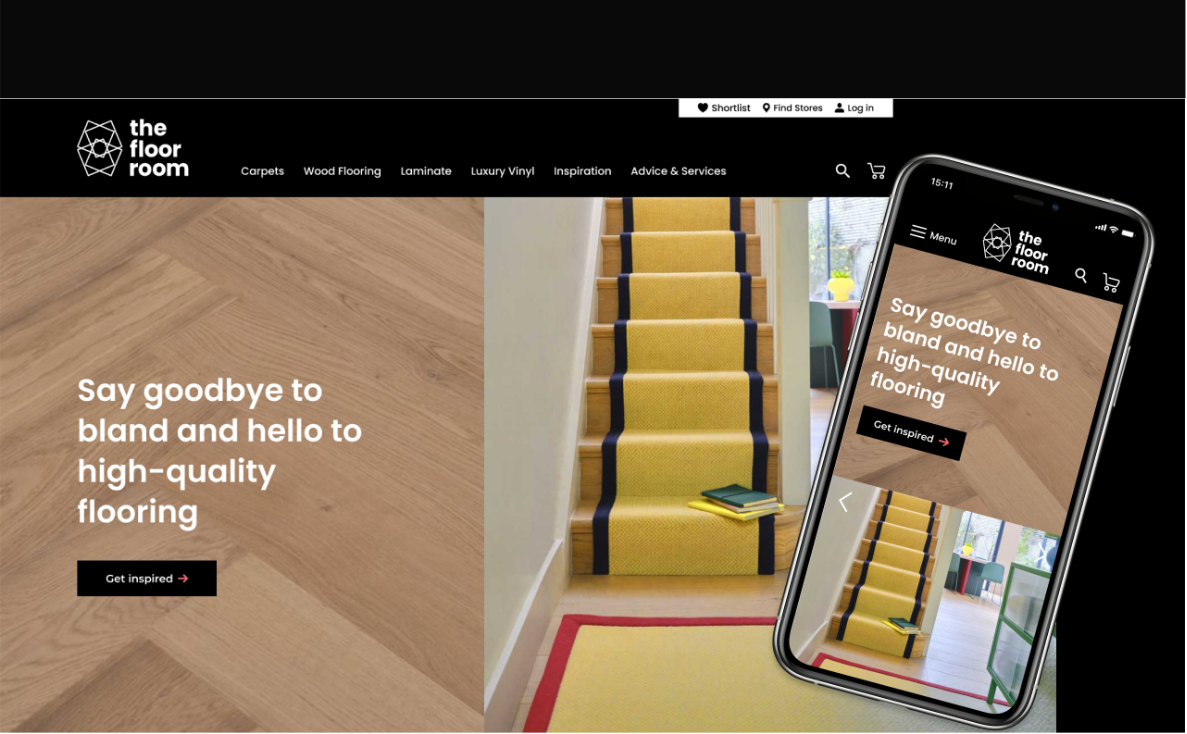
Designing a digital experience to match a premium retail brand.
- Services
- Customer Experience DiscoveryCustomer Experience Execution
- Industry
- Home and Garden
- Client
- The Floor Room
"The Floor Room had already built a premium experience in-store. Our challenge was making sure the digital journey lived up to the same standard while giving the business room to grow." - Timberyard Commerce Strategy LeadThe Floor Room set out to create a digital experience that reflected the quality of its retail offering while supporting ambitious plans to expand beyond direct-to-consumer sales into B2B.
The existing website and inherited Episerver platform weren't built around those goals. Customer journeys felt disjointed, and questions remained about whether the technology could support the flexibility and scalability the business would need as it grew.
Rather than recommending a new platform from the outset, Timberyard began with a detailed UX audit, competitor benchmarking and technical discovery. By combining customer experience insights with a review of the existing architecture, we helped The Floor Room define a clear roadmap and identified a composable commerce approach, powered by commercetools, as the strongest long-term solution.
Where they began
The Floor Room had a clear vision: deliver online the same premium experience customers enjoyed in its showrooms while creating a platform that could support future B2B growth.
Although the brand had established a strong retail presence, its digital experience didn't yet reflect that positioning. Navigation, customer journeys and the overall buying experience fell short of the expectations associated with a premium interiors retailer.
The inherited Episerver platform, originally shared with Carpetright, also introduced technical constraints. While it met immediate business needs, it raised important questions around flexibility, scalability and the ability to evolve alongside the brand.
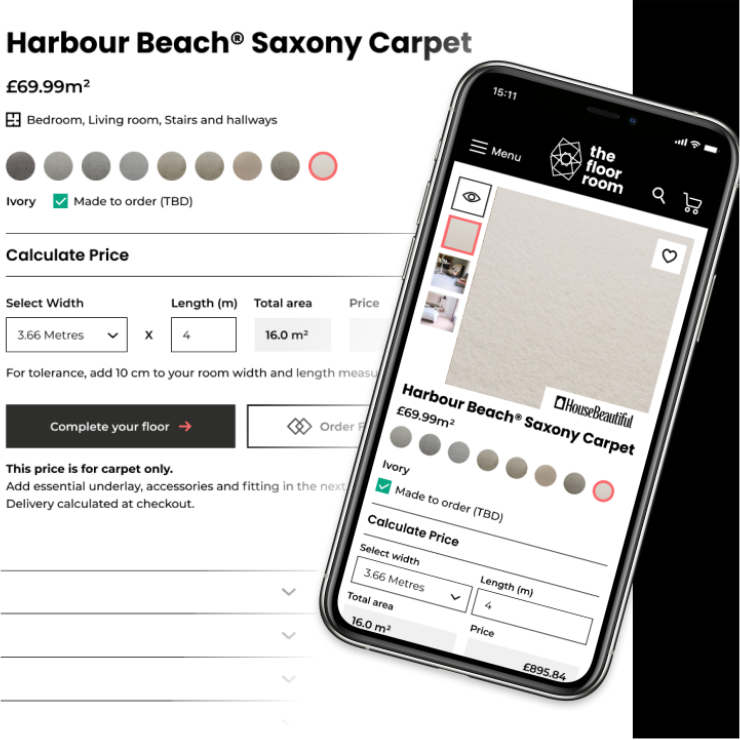
The opportunity wasn't simply to replace a platform. It was to create a digital experience that better represented the brand, simplified the customer journey and provided a technology foundation capable of supporting future growth.

The opportunity? To create something smarter, sharper, and far more aligned with the brand’s premium positioning – a platform built for now and ready for what’s next.

Where they are today
The discovery phase gave The Floor Room a much clearer picture of both the customer experience it wanted to deliver and the technology needed to support the change.
Our UX audit and benchmark analysis highlighted opportunities to improve navigation, product discovery and the overall purchase journey, while also establishing a shared vision for what a premium ecommerce experience should look like. Those insights became the foundation for a prioritised roadmap that balanced immediate improvements with longer-term strategic goals.
Alongside the experience work, we carried out a detailed technical assessment of the existing Episerver platform and reviewed alternative approaches, including Shopify proof-of-concepts that were already being explored internally. Expanding that evaluation to include composable commerce allowed us to compare each option against the business's future ambitions rather than its current requirements alone.
The outcome was a recommendation to adopt a commercetools-powered architecture, giving The Floor Room a more flexible platform capable of supporting evolving customer journeys, future B2B capabilities and continued digital growth without being constrained by a traditional monolithic solution.
Rather than making a technology decision based on short-term needs, the business now has a clear roadmap backed by user research, technical discovery and a platform strategy designed to grow alongside the brand.

StreamAMG